WCH Logo

Understanding Gallbladder Disease

What is Your Gallbladder?

Your gallbladder is a small organ about the size of your palm. It stores bile, a liquid that helps your body digest fats. When you eat, your gallbladder gets a signal to release this bile into your small intestine, where it mixes with food to help your body absorb the fats it needs.

Signs of Gallbladder Problems

Gallbladder disease can cause different symptoms:

Mild symptoms:

  • Upper belly discomfort
  • Upset stomach after eating
  • Nausea

Severe symptoms:

  • Sharp upper belly pain that spreads to your back near your right shoulder
  • Pain under your breastbone that feels like a heart attack

What Causes These Problems?

Most gallbladder symptoms come from gallstones – small, hard pieces that form inside your gallbladder. These stones can block the narrow opening of your gallbladder, preventing it from emptying properly and causing severe pain.

Sometimes, small gallstones can float out of the gallbladder obstructing the bile duct. This can cause two serious problems:

  • Pancreatitis – inflammation of your pancreas
  • Jaundice – yellowing of your skin and eyes

How Do Doctors Find Gallstones?

The best way to check for gallstones is an ultrasound of your belly. This safe, painless test uses sound waves to create pictures of your gallbladder.

Treatment Options

If you have gallstones causing symptoms, the most common treatment is laparoscopic surgery to remove your gallbladder. This modern surgery uses:

  • A tiny camera inserted through a small cut near your belly button
  • Three more small cuts below your ribs
  • Special instruments controlled by watching monitors

This approach is like playing a video game – the surgeon uses what they see on the screen rather than making one large cut.

Recovery After Surgery

Most patients can go home the same day as surgery. Benefits include:

  • Quicker healing than traditional surgery
  • Return to work in 3-10 days
  • Most people don’t need to change their diet
  • Some patients may notice loose bowel movements after high-fat meals


When to Get Checked

Since gallbladder symptoms can feel like acid reflux, heartburn, or ulcers, it’s important to get an ultrasound if you have ongoing belly pain. This ensures you get the right diagnosis and treatment for your specific condition. If you’re experiencing persistent upper belly pain or digestive issues, talk to your healthcare provider about whether gallbladder disease might be the cause.
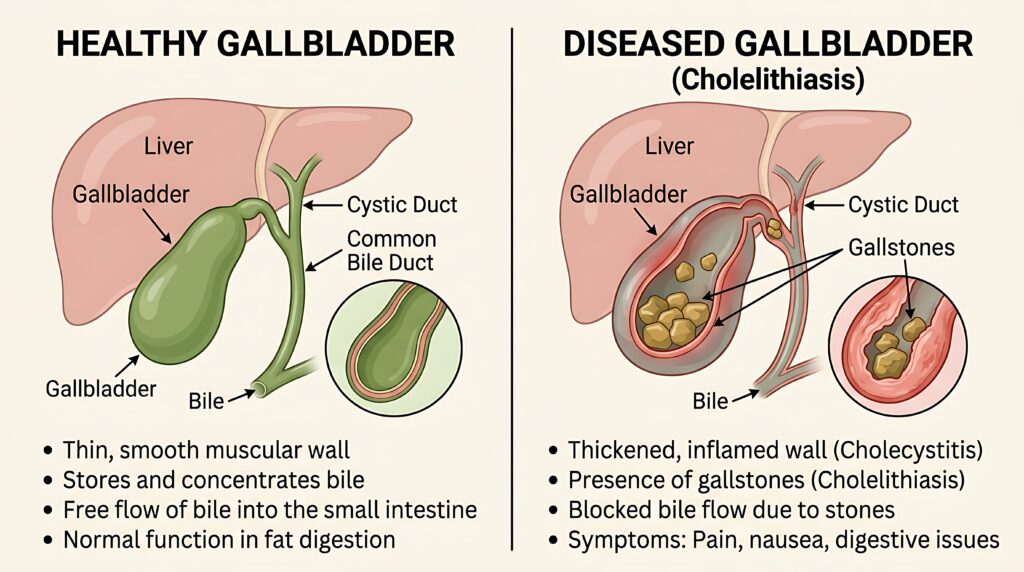

image of health and unhealthy gallbladder
Robert Ripley, MD
Dr. Robert Ripley General Surgeon


WickCares Bulletin Board

The place to find key patient and community member notices, or answers to frequently asked questions.

Healthcare billing delays often arise from extended insurance claim processing. These insurance delays can lead to confusion and financial strain for patients, who may not receive their bill until weeks or months after care is provided, making it harder to plan financially.

At Wickenburg Community Hospital & Clinics, we strive for timely and accurate billing. However, we cannot bill our patients until the organization has received full and accurate payment from insurance companies, a process that is often protracted and beyond our control. Once we are confident that the patient’s claims are processed and paid accurately by the insurance company, then we move forward with issuing a bill to the patient. Rest assured, we are committed to clear communication and our patient’s well-being.

For further questions, please call at 928-684-4365 or email us at financial.counselor@wickhosp.com.