For one hundred years, Wickenburg Community Hospital (WCH) has stood as a pillar of health and safety in our region. As we celebrate this centennial milestone, we look back not just at a building, but at a legacy of resilience deeply intertwined with the history of the American West. Our story began long before modern medical technology, in an era where healthcare often meant making do in emergencies until a doctor could be found.
The medical arts in our territory date back to the days of Fort Whipple in 1864 and St. Joseph’s Sanitarium in 1895. However, it was in 1926 that Wickenburg truly established its own foothold in local healthcare. That year, the first hospital opened its doors at 74 West Wickenburg Way. It was a modest beginning for a community experiencing the pressures of growth in a rugged environment, but it signaled a commitment to caring for our neighbors that remains unchanged today.
Throughout the 1930s and 1940s, the hospital was sustained by dedicated physicians like Dr. James Copeland and Dr. Floyd Bralliar. Dr. Bralliar, in particular, was instrumental in expanding the facility to meet the needs of a growing population. He added rooms, increasing bed capacity to twenty, and performed surgeries daily, often adapting to the harsh realities of frontier medicine. These early years were defined by a “pioneer spirit”—a determination to provide excellence in care despite limited resources and isolation
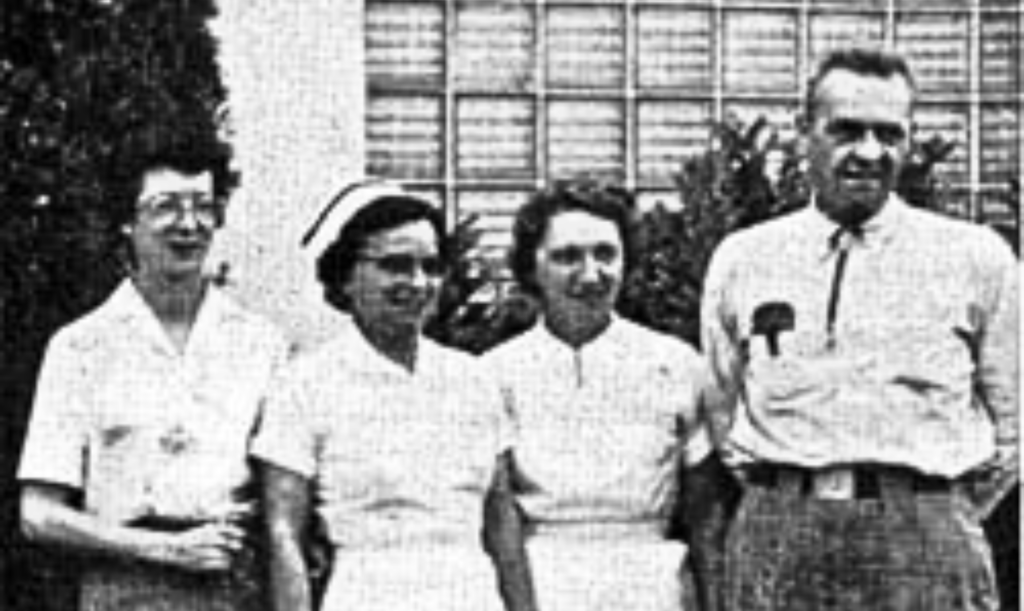
However, the path was not always smooth. In 1945, the hospital faced a critical turning point when Dr. Bralliar was injured in a plane crash. For a time, the facility’s future hung in the balance, kept operational only by the sheer will of staff and a licensed practical nurse. This period of uncertainty highlighted the fragility of rural healthcare, but it also set the stage for a remarkable community intervention that would secure the hospital’s future for generations to come.
As we reflect on these early roots, we are reminded that WCH was built on a foundation of grit and compassion. Join us next week as we explore how our community rallied to save their hospital from closure, transforming a private practice into the non-profit institution we know today.
Part 1 of 4 — 100 Years